Sint Maarten or Saint-Martin: The Dutch and French Sides Compared

The St Maarten Dutch side vs French side question is really two questions: what changes when you cross, and which half deserves your day. Sint Maarten and Saint-Martin sit on the same 87 square kilometre island, and the line between them runs through hillsides, roundabouts and at least one gas station without so much as a booth to slow you down. People ask us which side is better the way they'd ask about two different islands, but the honest answer is that you're choosing a flavor for a few hours of your day, not a destination. Philipsburg gives you the cruise-port energy and the duty-free strip; Marigot and Grand Case give you shuttered shops at lunchtime and a market that only runs twice a week. Both are worth seeing, and most of our own driving routes put a guest on both sides before the tour is over.
Quick answer
Sint Maarten (Dutch) and Saint-Martin (French) share one 87 square kilometres, with no passport check at the internal border, so the real choice isn't which side to visit, it's how you split a day between Philipsburg's cruise-port energy and Marigot's quieter French pace. Most visitors cross more than once without noticing.
Key takeaways
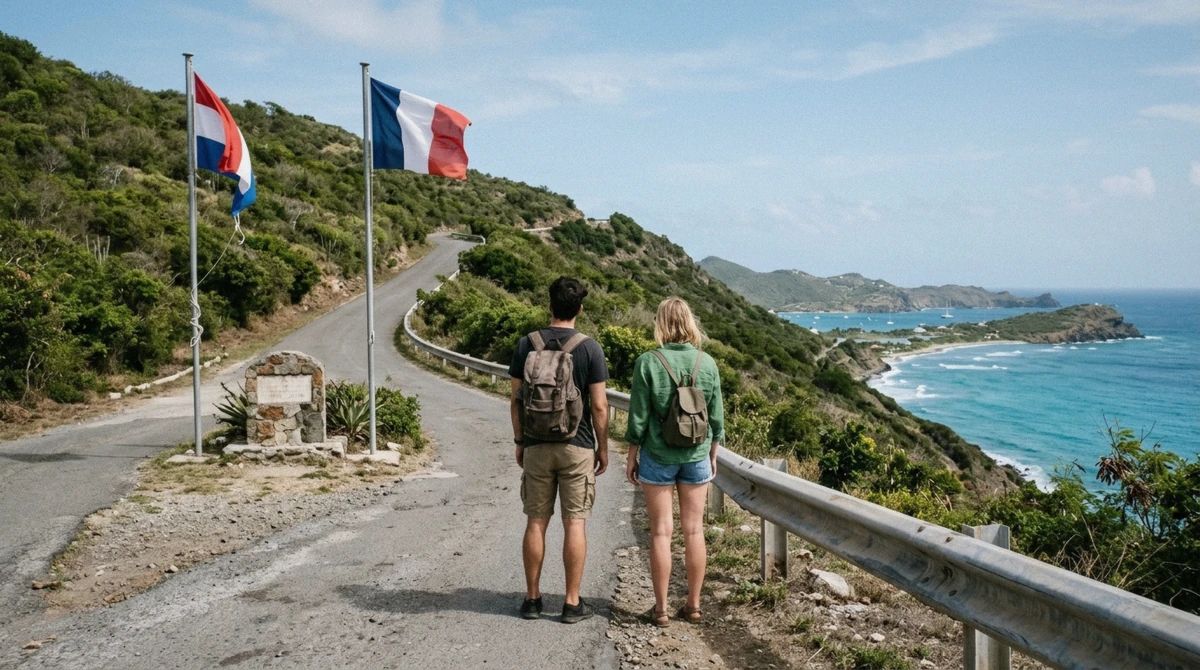
- No passport, no customs post at the internal border, just road signs and a monument marking the line
- Dutch side pays in Caribbean guilder or US dollars; French side runs on the euro
- Philipsburg is the cruise port and duty-free strip; Marigot is quieter, with its market open Wednesday and Saturday mornings only
- The sightseeing tour that covers both sides runs $53 for 4.5 hours if you want it handled for you
- For the full-island version at $62, see the Top Ten Highlights tour
- Doing both sides on your own timeline works too, see our guide to driving in St Maarten
Tours That Cross Both Sides
These island tours are built around the border crossing itself, so you see Philipsburg and Marigot, or the Dutch coast and the French hillsides, in the same day without planning the route yourself.
 from $53Both Sides in Half a Day
 St Maarten Sightseeing Tour: French & Dutch Sides
A half-day drive across both halves of the Friendly Island, with beach time at Grand Case and souvenir shopping in Marigot. The route finishes at the famous airport…
- See the French and Dutch sides on one drive
- Beach time at Grand Case
- Souvenir shopping in Marigot market
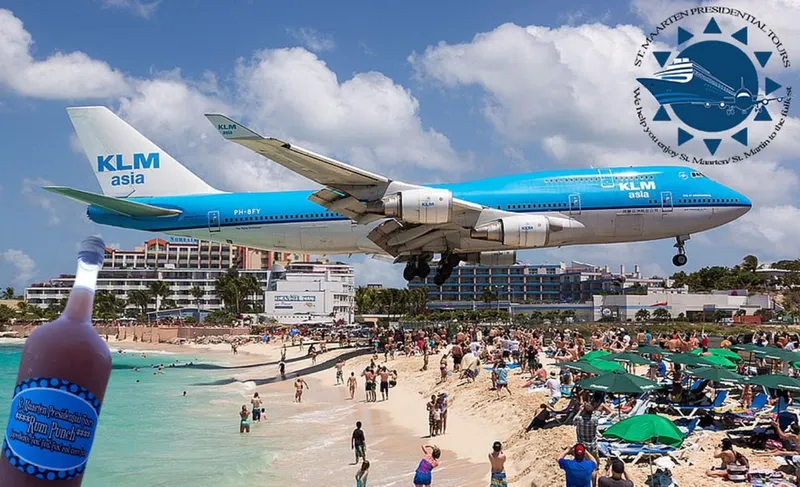
- Plane-spotting at Maho's airport beach
 from $62Most Complete Island Loop
 Sint Maarten Top Ten Highlights Full Island Tour
A full loop around the island hitting the top ten sights in one day, from Orient and Maho beaches to Topper's Rhum distillery, hilltop forts and the Amsterdam…
- Full circle of the Dutch and French sides in one day
- Stops at Orient Beach, Maho Beach and hilltop forts
- Topper's Rhum distillery and the Amsterdam cheese shop
- Local food stops and beach time included
 from $189Perfect 5.0★ Private Tour
 Private Customizable Sint Maarten Island Tour
A private island tour shaped entirely around your group, covering the French and Dutch sides at your own pace. Your guide picks the beaches, viewpoints and markets you…
- Fully private and built around your group
- Both the French and Dutch sides at your pace
- Beaches, viewpoints and markets of your choice
- Local tips on the best market prices
The Two Sides at a Glance
Before the details, here's the shape of the split. One island, one land border, two governments, two currencies, and a difference in pace that shows up the moment you cross.
| Dutch side (Sint Maarten) | French side (Saint-Martin) | |
|---|---|---|
| Status | Autonomous country within the Kingdom of the Netherlands | Overseas collectivity of the French Republic |
| Main town | Philipsburg, also the cruise port | Marigot |
| Currency | Caribbean guilder, US dollar widely accepted | Euro |
| Driving side | Right | Right |
| Known for | Casinos, duty-free shopping, cruise-day energy | French bistros, Grand Case restaurant row, quieter pace |
| Beach style | Maho, Great Bay, resort-lined coves | Orient Bay's long stretch, smaller coves near Grand Case |
The island counts 37 beaches in total, spread across both sides, and neither government controls access to the other's coastline. A rental car or a tour that crosses the line can string together beach time on both sides in the same afternoon.
Philipsburg or Marigot
Philipsburg (Dutch side)
- The cruise port itself, so this is where most first-time visitors land
- Front Street's duty-free shopping runs the length of the boardwalk on Great Bay
- Busiest on days when ships are in, with vendors, taxis and crowds to match
- Casinos and late-hour bars if that's part of your evening
Marigot (French side)
- A working town rather than a cruise stop, with a genuine lunch-hour lull
- The market trades Wednesday and Saturday mornings only, selling fish, crafts, spices and Creole food
- Grand Case, a short drive further on, is the island's restaurant village
- Quieter streets, fewer vendors, more café tables than souvenir stalls
Verdict Neither side wins outright. Philipsburg is the better first stop if you're on a cruise clock and want shopping and easy transport back to the ship. Marigot rewards a slower visit, ideally timed around its market mornings, and pairs naturally with a Grand Case lunch. Most of our own routes put a guest in both within the same day.
Crossing the Border
The split between the two sides dates back to the Treaty of Concordia, signed in 1648, and it has held for nearly four centuries with only the usual border disputes of history rather than a wall or a fence. Today the practical result is simple: the border is open. There is no customs post, no immigration booth, and no passport check between Sint Maarten and Saint-Martin.
Road signs, a change in flags, and a border monument mark the line, and that's it. You drive, walk or cycle across without stopping.
That doesn't mean the passport stays in the hotel safe for your whole trip. Getting onto the island in the first place still requires whatever your nationality needs for entry at the airport or cruise port you arrive through, on either side. Carry it with you day to day; you simply won't be asked for it again once you're on the road between Philipsburg and Marigot.
One thing worth correcting directly: several travel blogs claim you switch from driving on the right to driving on the left the moment you cross into French territory. That's false. Both sides drive on the right, the whole way across the island, and there's no adjustment to make at the line itself.
Money on Each Side
This is the one place the two sides genuinely diverge, and it's worth planning around rather than discovering at the register.
| Side | Official currency | In practice |
|---|---|---|
| Dutch (Sint Maarten) | Caribbean guilder (XCG) | US dollars accepted almost everywhere, prices usually quoted in dollars, change may come back in guilders |
| French (Saint-Martin) | Euro | Dollars accepted in Marigot and Grand Case, but at the business's own rate, not a bank rate; card is usually the better option |
The Dutch side's currency itself changed recently. On 31 March 2025 the Netherlands Antillean guilder was replaced by the Caribbean guilder, issued by the Centrale Bank van Curaçao en Sint Maarten. The two currencies circulated side by side until 30 June 2025; from 1 July 2025 only the Caribbean guilder is accepted for cash payment on the Dutch side.
The Caribbean guilder is pegged at USD 1 = XCG 1.79, the same rate the old guilder held, so the arithmetic hasn't changed even though the name and the notes have.
None of this affects card payments much, and it barely affects US dollar cash on the Dutch side, where dollars remain the practical everyday currency for most tourist spending. It matters more on the French side, where the currency is simply the euro and treating it as a dollar economy will cost you at the exchange. When a price genuinely needs converting, ask for it in euro rather than guessing at a dollar equivalent; exchange rates move, and a number quoted here today won't hold indefinitely.
Last verified: August 2026.
Language, Food and Pace
English gets you through most of the Dutch side without friction, which makes sense given how much of Philipsburg's economy runs on cruise-day English speakers. Dutch is the official language but you'll hear it less than English or the local Caribbean patois in daily life. Cross into Saint-Martin and French becomes the working language of shops, menus and street signs, though enough of the tourism economy runs in English that ordering lunch in Grand Case rarely turns into a struggle.
Food is where the difference is most fun to notice. The Dutch side leans toward casual, beach-bar plates built for a cruise-day lunch between excursions. Grand Case, on the French side, is genuinely built around eating: a strip of restaurants ranging from lolo shacks doing grilled local seafood to sit-down French bistros, and it's worth timing a visit for dinner rather than a quick pass-through.
Pace follows the same pattern. Philipsburg moves at cruise-ship speed most days, busy when ships are in and noticeably calmer when they're not. Marigot has its own rhythm built around the market mornings, and by early afternoon on a non-market day the town can feel almost sleepy compared to the boardwalk across the border.
What Each Side Is Actually Good For
If duty-free shopping, casino nights or the easiest possible return to a cruise ship are the priority, the Dutch side does that job well and doesn't pretend to be anything else. Great Bay's boardwalk, Front Street's shops, and the short walk back to the pier make Philipsburg the practical choice on a tight schedule.
The French side earns the detour for beaches, food and a slower afternoon. Orient Bay is the island's widest beach and sits entirely on the French side, backed by beach bars rather than resort towers. Grand Case delivers the island's best concentrated stretch of restaurants.
And for anyone willing to climb, Pic Paradis, at 424 metres the island's highest point, sits on the French side above Marigot; Loterie Farm, a former sugar plantation turned nature park with trails and a zipline, occupies its lower slopes and makes a genuinely different kind of stop from either town center.
Which Side Suits Your Day
If you're on a cruise stop with limited hours
start in Philipsburg near the pier, and only cross to Marigot if your ship's return time genuinely allows for it. See our cruise-day guide for the arithmetic.
If you want the island's best restaurant strip
head straight for Grand Case on the French side, ideally timed for dinner rather than a rushed lunch.
If your visit lands on a Wednesday or Saturday morning
build in Marigot market time, it's the one fixed schedule worth planning around on the French side.
If you want duty-free shopping or a casino evening
the Dutch side is built for exactly that, and Philipsburg's Front Street is the place to do it.
If you have a full day and a rental car or a tour that crosses the border
do both. The drive between them is short enough that splitting the day rarely feels rushed.
Doing Both Sides in One Day
The border adds almost no friction to a day that visits both sides, which is exactly why so many island tours are built to cross it rather than stick to one flag. A typical route might start on the Dutch side near the cruise port, work up toward Maho Beach and the airport approach, cross into French territory near Marigot, and loop back through Grand Case or up toward Orient Bay before returning. None of that involves a checkpoint, a form or a wait; the only real planning is around timing, not paperwork.
If you'd rather not work out the route yourself, our own island tours that cross the border are built around exactly this pattern, moving between Dutch and French stops in the same run so you see both without doubling back on your own. For the Maho Beach stop specifically, and the safety rules that come with it, see our plane-spotting guide.
Frequently Asked Questions
Do you need a passport to cross from the Dutch to the French side of St Maarten?
No. The internal border between Sint Maarten and Saint-Martin has no passport check, customs post or immigration booth. You do need whatever entry documents your nationality requires to arrive on the island in the first place, at the airport or cruise port, but you won't be asked for them again crossing between the two sides.
What currency should you carry on each side of St Maarten?
US dollars work almost everywhere on the Dutch side, where the local currency is the Caribbean guilder. On the French side the currency is the euro, and while some Marigot and Grand Case businesses take dollars, the rate is theirs to set, so a card often works out better there.
Which side of St Maarten is better to stay on?
It depends on what you want out of the trip. The Dutch side puts you closer to the cruise port, shopping and nightlife; the French side offers a quieter pace and better dining, especially around Grand Case. Many visitors base themselves on one side and simply drive across for the other.
Why is St Maarten split between two countries?
The division dates to the Treaty of Concordia in 1648, which divided the island between the Netherlands and France. It remains the smallest inhabited landmass in the world shared by two nations, and the border has stayed open and largely uncontested since.
Which side of the island has the better beaches?
Both sides share in the island's 37 beaches, so it's less about one side winning and more about style. The French side has Orient Bay, the island's widest stretch, backed by beach bars rather than resorts. The Dutch side has Maho, right at the airport approach, and Great Bay by the cruise port. Our Maho Beach guide covers the Dutch side's most talked-about beach in detail.
How long does it take to drive from Philipsburg to Marigot?
It's a short drive, generally well under half an hour outside of peak traffic, since the two towns sit on the same small island with one main road network connecting them. Traffic around Simpson Bay and the airport corridor can slow things down at busy times; our driving guide covers the road conditions in full.