The Best Time to Visit Sint Maarten, Month by Month

The best time to visit St Maarten is the stretch the Meteorological Department St. Maarten calls the dry season, December to May, when rainfall is at its lowest and the seas are calmest. That is also the busiest and priciest window, so the honest answer depends on what you are optimising for. Below we break the year down month by month using the Met Department's own records, and set out plainly what the Atlantic hurricane season does and does not mean for a tour you have already booked.
Quick answer
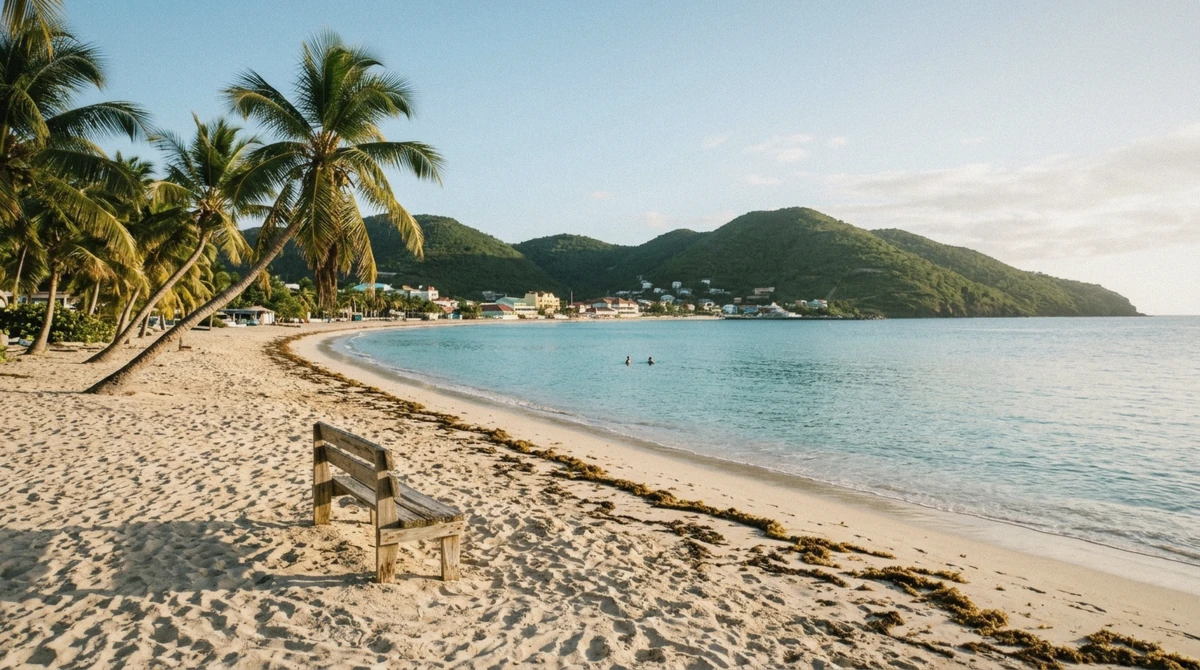
December through May is the dry season on Sint Maarten and the best stretch for reliable weather, with warm days, low rainfall and the island's busiest cruise and hotel traffic. May and early June form a quieter shoulder window after the winter peak and before hurricane season builds. June through November brings more rain and the Atlantic hurricane season, with activity concentrated August through October, so plan around that window rather than through it.
Key takeaways
- Best window: December through May, the dry season, for the most reliable conditions
- Shoulder pick: May and early June, after the winter crowds thin and before hurricane season builds momentum
- Season to plan around: August through October, when Atlantic hurricane activity concentrates
- The island's terminal and much of its visible infrastructure were rebuilt after Hurricane Irma in 2017; anything written before that date may describe a place that looks different now
- January to March draws the fullest long-haul flight schedule, which is also the busiest window for plane-spotting at Maho Beach, see our Maho guide
- The full island loop tour runs year-round at $62 per person, a useful anchor price whichever month you land
Tours That Run Year-Round
These trips operate across the calendar, weather permitting on any given day, so they're a reasonable anchor whichever month you're planning around.
 from $62Most Complete Island Loop
 Sint Maarten Top Ten Highlights Full Island Tour
A full loop around the island hitting the top ten sights in one day, from Orient and Maho beaches to Topper's Rhum distillery, hilltop forts and the Amsterdam…
- Full circle of the Dutch and French sides in one day
- Stops at Orient Beach, Maho Beach and hilltop forts
- Topper's Rhum distillery and the Amsterdam cheese shop
- Local food stops and beach time included
 from $53Both Sides in Half a Day
 St Maarten Sightseeing Tour: French & Dutch Sides
A half-day drive across both halves of the Friendly Island, with beach time at Grand Case and souvenir shopping in Marigot. The route finishes at the famous airport…
- See the French and Dutch sides on one drive
- Beach time at Grand Case
- Souvenir shopping in Marigot market
- Plane-spotting at Maho's airport beach
 from $45Best Value Sunset
 Simpson Bay Sunset Catamaran Cruise
An easy 90-minute evening sail along the island's coastline departing from Simpson Bay. The cruise is timed for the sunset and the views over the Caribbean.
- 90-minute evening catamaran cruise
- Departs from Simpson Bay
- Timed for sunset over the coastline
- Relaxed, affordable end to the day
Seasons at a Glance
Read the Verdict column below as a quick steer, not a guarantee. Typical patterns hold most years; any single week can still run wetter, drier, calmer or windier than the average for its month.
| Month | Conditions | Weather | Crowds | Verdict |
|---|---|---|---|---|
| January | Dry season, sea calm | Warm, low rain | Peak | Best overall, book ahead |
| February | Dry season continues | Warm, low rain | Peak | Best overall |
| March | Driest month of the year | Warm, lowest rainfall | Peak | Best weather, busiest crowds |
| April | Dry season, fewest rain days | Warm, dry | High | Excellent, slightly quieter |
| May | Dry season ends | Warm, rain starting to rise | Moderate | Good value shoulder |
| June | Hurricane season begins | Warm, more rain | Moderate | Fair, watch the forecast |
| July | Rainy season | Warm, humid, showers | Moderate | Fair, book with flexibility |
| August | Hurricane activity rising | Warmest month, humid | Lower | Caution, storm season active |
| September | Peak hurricane months | Warm, wet, storm risk | Lowest | Avoid firm plans, storm risk highest |
| October | Peak hurricane months | Warm, wet, storm risk | Low | Avoid firm plans, storm risk high |
| November | Wettest month, season ends late month | Warm, highest rainfall | Rising | Caution early, improving late |
| December | Dry season resumes | Warm, rain dropping fast | Rising to peak | Strong choice from mid-month |
Below is the temperature and rainfall picture the Meteorological Department St. Maarten publishes, typical figures rather than a forecast for any given year.
| Month | High | Low | Rain |
|---|---|---|---|
| January | 30°C (86°F) | 23°C (73°F) | Moderate |
| February | 30°C (86°F) | 22°C (72°F) | Low |
| March | 31°C (88°F) | 23°C (73°F) | Lowest of the year |
| April | 31°C (88°F) | 23°C (73°F) | Low, fewest rain days |
| May | 32°C (90°F) | 24°C (75°F) | Rising |
| June | 32°C (90°F) | 25°C (77°F) | Moderate |
| July | 32°C (90°F) | 25°C (77°F) | Moderate to high |
| August | 32°C (90°F) | 25°C (77°F) | High, warmest month |
| September | 32°C (90°F) | 25°C (77°F) | High |
| October | 32°C (90°F) | 24°C (75°F) | High |
| November | 31°C (88°F) | 24°C (75°F) | Highest of the year |
| December | 30°C (86°F) | 23°C (73°F) | Moderate, dropping |
By the Met Department's own figures, March is the driest month and November the wettest, with mean annual temperature around 27°C (81°F) and a normal daily maximum near 32°C (90°F). Figures sourced from the Meteorological Department St. Maarten; check the current forecast close to your travel dates rather than relying on typical averages alone.
Best Season by Traveler Type
If you want the most reliable conditions and don't mind the crowds
December through April, the heart of the dry season and the island's peak.
If you're chasing lower prices without wandering into hurricane risk
May or the first half of June, the shoulder weeks after peak season winds down.
If you're timing a Maho Beach plane-spotting trip specifically
January through March, when the winter long-haul flight schedule is at its fullest.
If you're a first-time visitor who wants the safest bet
February or March, the driest, most settled stretch with the least chance of a washed-out day.
If you're comfortable watching the forecast closely and want the lowest prices of the year
late June or early July, accepting the trade-off of rising rain and the start of hurricane season.
The Dry Season, December to May: Warm Days, the Busiest Crowds
The dry season runs December through May, and it's the stretch the Meteorological Department's own rainfall figures back up clearly, with March recording the least rain of any month and April close behind with the fewest rain days. Daytime highs sit around 30 to 31°C (86 to 88°F) through the early months, climbing toward 32°C (90°F) by May as the season turns. This is also peak cruise and hotel season island-wide, so prices run highest and popular beaches, restaurants and tour departures fill earliest, particularly around the winter holidays and into February and March.
January through March carries an extra reason to visit beyond the weather: it's the fullest stretch of the long-haul international flight schedule into Princess Juliana International Airport, which makes it the busiest window for watching planes pass low over Maho Beach. The Orient Bay and Maho Beach half-day tour runs through this period and pairs the two Dutch and French highlights in one outing, though for the plane-spotting details themselves our dedicated Maho guide covers the timing and the safety rules in full rather than repeating them here.
Booking lead time matters most in this window. Popular tours and hotel rooms for the February and March stretch fill weeks, sometimes months, ahead for the busiest dates around school holidays and long weekends. If your travel dates are fixed in the dry season's busiest weeks, book earlier than you would for a quieter month.
Sea conditions through the dry season tend to run calmer as well, since the trade winds that pick up later in the year haven't fully built. That makes December through May a reasonable window for anyone weighing a catamaran outing like the Simpson Bay sunset catamaran cruise alongside a land tour, since calmer water generally means a smoother ride and better visibility for anyone snorkeling along the way.
Hurricane Season, and What It Means for a Booked Tour
The Atlantic hurricane season runs 1 June to 30 November, with activity concentrated August through October, per the NOAA National Hurricane Center. That doesn't mean every day in that window is stormy. Most days across the season are ordinary Caribbean weather, warm with afternoon showers that pass in under an hour.
What it does mean is that the risk of a named storm affecting your specific travel dates is real and rises through the peak months, and no operator can promise a tour will run on a day a storm is forecast.
We never state that a tour is guaranteed to run, or that any month is storm-free, because neither claim would be honest. Operators cancel on the day for weather and refund according to their own policy, and that policy is worth reading before you book if your dates fall inside the June-to-November window. If your trip is timed around a cruise call rather than a hotel stay, our cruise-day guide covers the added risk of a delayed or cancelled tour against a fixed all-aboard time.
If your dates are fixed inside August through October specifically, the practical approach is flexibility rather than avoidance: build a spare morning or afternoon into the trip, choose operators with a clear stated refund policy, and check the forecast in the days immediately before rather than weeks out, since tropical systems can develop or dissipate quickly at that range.
The Shoulder Weeks Worth Knowing About
May and the first half of June sit in the gap between the winter peak and the deepest part of hurricane season, and they're the shoulder window worth knowing about if lower prices matter more than guaranteed sunshine. The dry season's low rainfall hasn't fully given way yet, daytime highs are already warm at 32°C (90°F), and hotel and tour prices ease as the winter crowd thins out. It's a reasonable trade for a traveler who watches the forecast and stays flexible.
The other shoulder worth naming is mid-to-late December, before the winter peak fully sets in. Rainfall is already dropping fast from November's highs, and the busiest holiday-week crowds haven't arrived yet in the first half of the month. It's a narrower window than May, but for anyone traveling before the school-holiday rush, it offers dry-season conditions without dry-season pricing.
Neither shoulder window is a secret among regular visitors, so don't expect empty beaches, just noticeably shorter lines at the more popular stops and easier tour availability on short notice than you'd find in February or March. If your schedule can flex by even a week or two either side of the winter peak, these are the two stretches worth checking first.
Sea, Sun and What the Met Department Records
The Meteorological Department St. Maarten puts the island's mean annual temperature at about 27°C (81°F), with August as the warmest month and sea temperature running close to the same figure year-round, around 27°C. Normal daily maximum sits near 32°C (90°F) and normal daily minimum near 23°C (73°F), a narrow enough range that no month on Sint Maarten is genuinely cold, the difference between seasons is rainfall and storm risk far more than temperature.
Annual rainfall averages about 1,160 mm near sea level, higher in the hills toward Pic Paradis, with roughly 145 rain days a year on average. April sees the fewest, around 8 days, and November the most, around 15. Showers, outside a named storm, are usually short and fall in the late afternoon, rarely enough to write off a whole day's plans.
For a swimmer or a snorkeler, the takeaway is that sea temperature barely moves across the year, so there's no cold-water month to avoid the way there might be on an island further from the equator. The variable that actually changes your day is rainfall and wind, not water temperature, which is one more reason the dry season earns its reputation as the safer overall bet.

Why Old Guidebooks Describe an Island That Changed
Hurricane Irma struck Sint Maarten directly on 6 September 2017 as a Category 5 storm, and it damaged or destroyed a very large share of the island's buildings, including the airport terminal at Princess Juliana International. Anything written about the island before September 2017, a blog post, an old guidebook, even some older photos still circulating online, may describe places that no longer look the same, and it's worth checking the publication date on anything you're reading rather than assuming it's current.
The airport rebuild is the clearest visible marker of recovery. The new departures hall opened in November 2023, and the rebuilt terminal officially reopened on 14 November 2024, financed largely through the World Bank-managed Sint Maarten Trust Fund. That's roughly seven years from storm to full terminal reopening, a timeline worth keeping in mind if you're comparing a pre-2017 description of the island against what you'll actually find today.
The honest takeaway isn't that Irma is still an open wound, the island has rebuilt a great deal in the years since, it's that recency matters more here than on islands with a quieter recent history. When you're researching, favor sources updated in the last year or two over older ones, and treat any specific claim about a building, a beach facility or a restaurant with a little more scrutiny if the source predates 2018.
This is also why we date our own facts on this site rather than leaving them to age silently. A rebuild timeline that took seven years from storm to reopened terminal is a reminder that recovery here happened in visible stages, and a photo or a review from 2016 can no longer be trusted to show you what's actually there today.
What If the Weather Turns During Your Trip
A single wet afternoon, even in the dry season, doesn't usually change much: showers pass quickly and most outdoor plans just shift by an hour or two. A forecast storm is a different matter, and operators handle it with cancellation and refund policies that vary company to company. Build a spare morning into any trip during the wetter months, and read the cancellation terms on any tour you book, particularly the private customizable island tour, which can shift its own timing around weather more easily than a fixed-departure trip can.
Prices and availability move with the calendar as much as the weather does. December through April, expect the highest rates and the earliest sell-outs on popular departures. From June onward, rates ease as demand drops, though flexibility on your own end becomes more valuable as storm risk rises through the season's peak months.
Travel insurance that covers weather-related trip interruption is worth reading closely if your dates fall in the June-to-November window, since it's the one practical safeguard against a cancelled flight or a missed connection that a tour operator's own refund policy won't cover. It's a small added cost for a real gap in protection during the months when the odds of a disruption are genuinely higher than the rest of the year.
So, When Should You Go?
December through May remains the strongest overall window, driest conditions, warmest reception from the island's tour operators and restaurants, and the least chance a forecast disrupts your plans. If price matters more than certainty, May or early June offers a genuine discount for only a modest rise in rain risk. The stretch to plan carefully around, not necessarily avoid outright but treat with real flexibility, is August through October, when Atlantic hurricane activity concentrates and no operator can promise a fixed-date tour will run.
Whichever month you land on, the sightseeing tours across Sint Maarten run in some form across the calendar, weather allowing on the day, so the real planning question is less which month has tours at all and more which month gives you the best odds of the trip you actually pictured.
Frequently Asked Questions
What is the best month to visit St Maarten?
March, the driest month by the Meteorological Department's own figures, combined with warm, settled dry-season conditions running December through May. It's also the busiest and priciest stretch, so book ahead.
When is hurricane season in St Maarten?
The Atlantic hurricane season runs 1 June to 30 November, with activity concentrated August through October, per the NOAA National Hurricane Center. Build flexibility into any booking that falls in that window.
Is it worth visiting St Maarten in September?
September sits inside the peak hurricane months, so any firm plan needs real flexibility and a clear look at the operator's cancellation policy. Prices and crowds are at their lowest, which appeals to travelers comfortable watching the forecast closely.
What is the weather like in St Maarten in the rainy season?
Warm and humid, with showers that are usually short and fall in the late afternoon outside a named storm. Annual rainfall averages about 1,160 mm, with November the wettest month and roughly 145 rain days a year on average across the calendar.
When is the cheapest time to visit St Maarten?
Rates ease from June onward as the winter crowd thins, with the lowest prices generally running through the deeper hurricane-season months. The trade-off is rising storm risk, so weigh the discount against the flexibility you're able to build into your trip.
Do island tours still run during hurricane season?
Yes, on most days. Tours like the full island loop operate year-round, but no operator can guarantee a fixed date will run if a storm is forecast, and cancellations follow each operator's own refund policy rather than a blanket promise.